To much iron may "rust" blood vessels
.......(very interesting)
WASHINGTON - Excess iron in the body can harm the
endothelium, or inner lining of blood vessels,
boosting a person's odds of developing hardening of
the arteries and heart attack, a Japanese study
concludes.
According to study lead investigator Dr. Hidehiro
Matsuoka of Kurume Medical School, high levels of iron
appear to impede the action of nitric oxide, a
chemical released by the endothelium, which aids in
keeping blood vessels relaxed. A number of studies
have shown that iron is a risk factor for
arteriosclerosis, or hardening of the arteries.
Matsuoka stressed that oral iron supplements are
generally safe, because absorption at those dosage
levels is "quite limited."
Nevertheless, consuming high amounts of iron over the
long term may increase iron levels in the body, he
cautioned. Matsuoka said people should watch their
intake of iron the same way they watch cholesterol,
and get regularly tested for high iron levels if they
are over 40 and have other risk factors for heart
disease, such as high blood pressure or diabetes.
In one phase of the study, scientists injected 10
healthy volunteers with high doses of iron (0.7
milligrams per kilogram body weight) and used
ultrasound imaging to observe arterial wall
functioning.
The excess iron raised levels of malondialdehyde, a
chemical marker for oxidation, and inhibited normal
endothelial function. The development of rust on
metals is the result of oxidation.
The researchers also monitored the effects of lowering
iron blood levels in 10 cigarette smokers and found
that this caused endothelial function to return to
normal.
Understanding the effects of iron removal in smokers
is important because, among risk factors for heart
disease, smoking is one of the strongest causes of
oxidation.
The study also could help to explain why
premenopausal women have less heart disease, since
iron is removed from the body in menstruation.
Previous studies have pointed to the protective
effects of estrogen in women of childbearing age.
Iron overload can occur when iron is given
intravenously to treat certain types of anemia and
chronic kidney failure, Matsuoka noted. He urged that
whenever possible, intravenous iron administration
"should be avoided" to prevent future heart attacks
and stroke.
Matsuoka presented his findings at a meeting of the
American Heart Association's Council for High Blood
Pressure Research.
----------------------------------------------------------
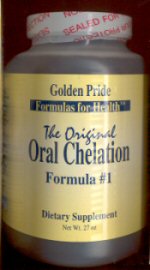
Our Formula #1 Oral Chelation cleans metals out of your blood.
Our newsletter comes out once a month.
To subscribe, just type your email address in the box
below then click on submit.